Skip to content
Woodside

Welcome to

Woodside

Treasuring The Natural World

Woodside

A World Apart, Rooted in Nature and Tradition

Overview

Just north of Silicon Valley, yet a world apart, Woodside is one of the Bay Area’s most distinctive residential communities. With roots stretching back well before the California Gold Rush, Woodside has evolved from a logging and agricultural community into an enclave of extraordinary country estates, rustic luxury, equestrian traditions, and protected natural beauty. Despite its proximity to one of the world’s most important centers of technology and finance, Woodside retains a rural character and sense of privacy that make it a retreat from the intensity and pace of Silicon Valley.

During the Gold Rush era, Woodside became an important source of lumber for the construction boom in San Francisco, approximately 30 miles to the north. As the 19th century progressed and the sawmills gave way to farms, ranches, orchards, and vineyards, prosperous San Francisco families were drawn to Woodside’s beautiful landscape and began establishing magnificent country estates among its oak-covered hills and redwood forests. By the 1880s, the tradition of the grand Woodside country estate was firmly established.

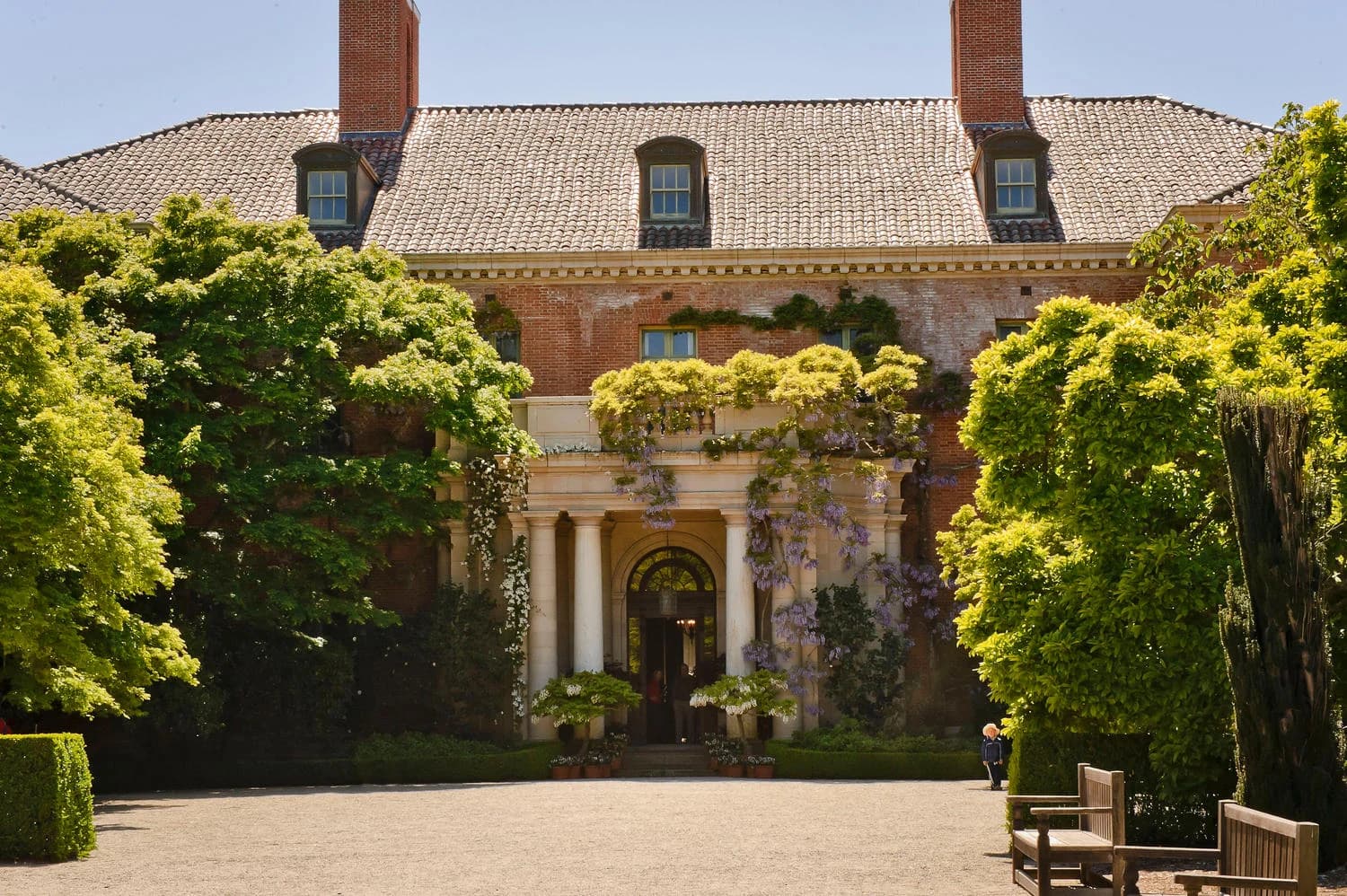
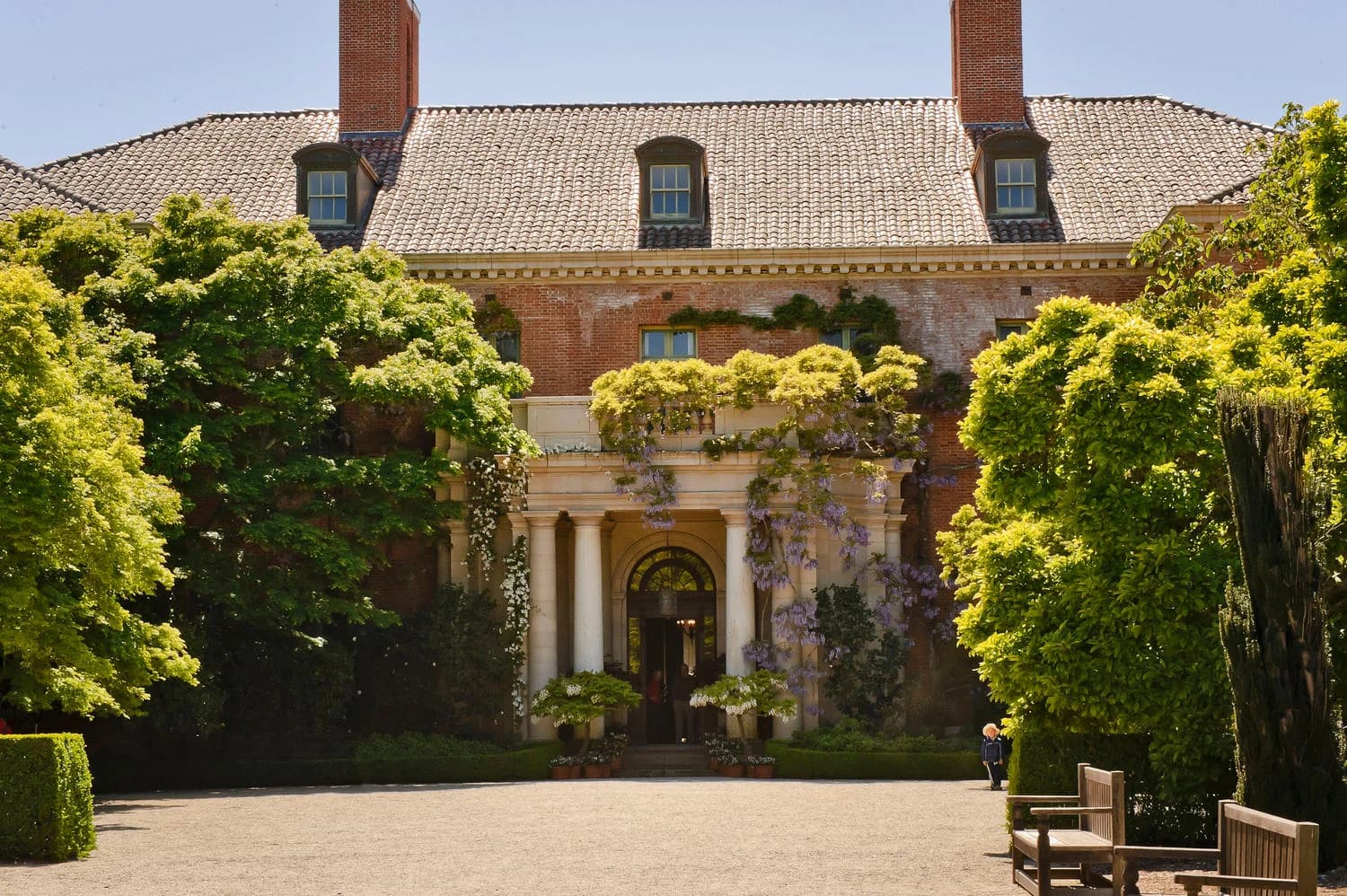
Top:Filoli Historic House & GardenBottom left:Filoli Historic House & GardenBottom right:Filoli Historic House & Garden

Several of these historic properties remain important parts of Woodside’s identity. Filoli, completed in 1917 for William and Agnes Bourn, is one of the finest surviving country estates of the early 20th century and became internationally recognizable through its use as a filming location, most famously in the television series Dynasty. Green Gables, the historic Fleishhacker family estate designed by Charles Sumner Greene, is another celebrated Woodside property. The monumental Buck Estate, inspired by England’s Hampton Court, is yet another reminder of the extraordinary estates created here. The wooded lands of the historic Phleger Estate are now preserved as part of the Golden Gate National Recreation Area.


Estates, Architecture & Real Estate

Today, Woodside is one of the Bay Area’s most affluent and expensive residential communities. Its upper end has produced some of the most extraordinary residential transactions in the country. A Woodside estate sold for $117.5 million in 2012, while historic Green Gables sold for $85 million in 2025, making it the Bay Area’s most expensive publicly reported residential sale that year. Eight-figure estate sales illustrate just how dramatically the value of Woodside property has risen while the town has continued to protect its rural character.

Yet Woodside is not composed solely of immense estates. There are also enchanting residential neighborhoods with a more intimate scale. Woodside Glens, for example, was originally subdivided in the 1920s, when its lots were marketed as sites for second homes and vacation cabins for San Franciscans. Today it remains a distinctive neighborhood within the larger Woodside community.

Top:The Buck Estate in Woodside

Throughout Woodside, tranquil lanes meander beneath canopies of oaks and redwoods. Many of the larger estates are secluded from the road, approached by long private driveways and protected by stone walls, rustic fencing, or gates. Private vineyards, olive orchards, pastures, corrals, barns, and gardens dot the gently rolling terrain, reinforcing the feeling that Woodside remains a country community despite its location at the heart of the Peninsula.

Woodside’s architecture reflects this setting. In addition to its grand historic estates, homes are often interpretations of Craftsman, farmhouse, ranch, early California, and contemporary styles. The community includes landmark haciendas, ranch houses, and modern residences by notable designers and architects including Cliff May, Gardner Dailey, and William Wurster. Woodside’s longstanding emphasis on local land-use control and preservation has helped protect the open space, low-density development, and rural atmosphere that distinguish the town from much of the surrounding Peninsula.


Village Life & Equestrian Culture

Reflecting Woodside’s laid-back culture is its small and charming town center. Longstanding local institutions include the Pioneer Saloon, Buck’s of Woodside, Roberts Market, Roberts Hardware, Tack & Feed, and the Michelin-starred Village Pub. Historic sites include the Woodside Store, now preserved as a San Mateo County museum, as well as the Woodside Community Museum. Together, these businesses and historic buildings help retain the informal village character that has long defined central Woodside.

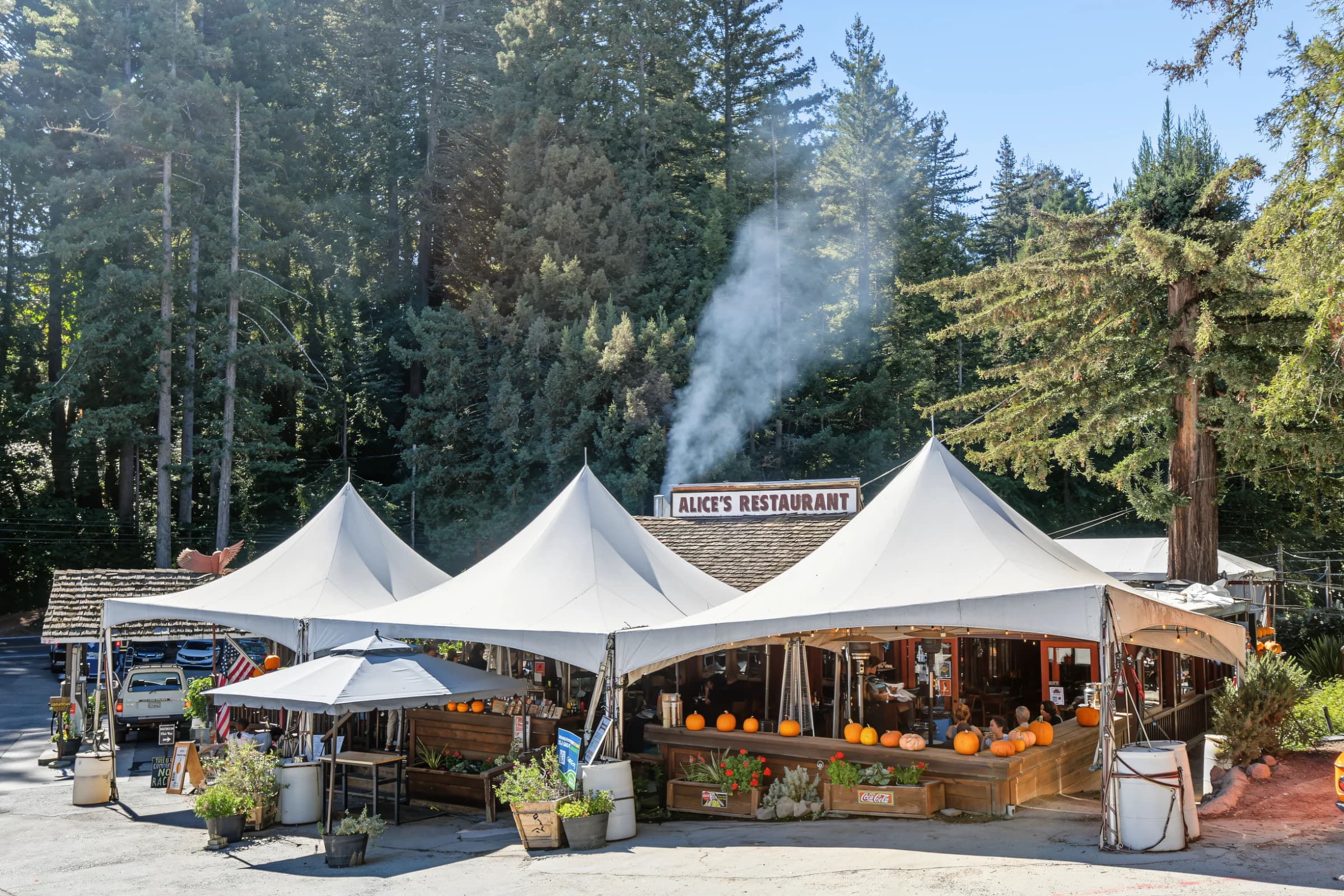
Beyond the town center are other longtime destinations, including the Skywood Trading Post, the Mountain House, and Alice’s Restaurant, a landmark gathering place among the redwoods on Skyline Boulevard. Alice’s has been part of the mountain community for generations and remains especially popular with locals, hikers, equestrians, bicyclists, and motorcyclists.

Top:Roberts Market in WoodsideBottom left:The Menlo Circus Club

Horses play a significant role in Woodside’s culture. The community has a long tradition of equestrian estates and of Thoroughbred, carriage, and steeplechase horses. Horse trails wind throughout the area, and hitching posts remain part of Woodside’s streetscape. The Town itself describes its character as “trails, not sidewalks” and “hitching posts, not stop lights.” The Horse Park at Woodside, situated on more than 270 acres, provides extensive equestrian facilities including arenas, cross-country courses, an exercise track, trails, and a polo arena. Walking, horseback riding, and bicycling remain an integral part of Woodside life.


Natural Beauty & Open Space

Within and immediately surrounding Woodside are thousands of acres of parks, preserves, forests, meadows, creeks, trails, and mountain ridges. Deer, coyotes, bobcats, squirrels, and other wildlife are common, while mountain lions are occasionally seen and birds of prey can often be spotted above the hills. The towering redwoods of the Santa Cruz Mountains and the native oak-covered hillsides create a landscape that feels remarkably removed from the urban communities only minutes away.

Top:Redwood grove in Woodside, California

Location, Schools & Silicon Valley

Woodside nevertheless offers convenient access to the Peninsula and the greater Bay Area. Stanford University, Stanford Shopping Center, Sand Hill Road, and Menlo Country Club are all nearby. Sand Hill Road is internationally known as a center of venture capital and private equity, while Fisher Investments continues to maintain a corporate office in Woodside itself. San Francisco and San Francisco International Airport are approximately 30 miles away, and California’s wine country, Pacific Coast beaches, and Carmel are all within reach for day trips.

Education is another important part of the area. Woodside Elementary School serves students through eighth grade, while Woodside High School serves the greater community at the secondary level. Esteemed private schools nearby include Woodside Priory and Menlo School, and Stanford University is only a short distance away.

Woodside’s extraordinary privacy, natural beauty, and proximity to Silicon Valley have long attracted leaders in technology, finance, entrepreneurship, and the arts. Among those closely associated with Woodside over the years are Oracle founder Larry Ellison, technology entrepreneur Tom Siebel, Intuit co-founder Scott Cook, singer and artist Joan Baez, and musician Neil Young. Rather than existing apart from Woodside’s rural traditions, many of these residents have been drawn to precisely the privacy and natural environment that the community has worked so carefully to preserve.

Top:Menlo Country ClubBottom:Stanford University in Silicon Valley

Woodside has also long attracted artists, architects, and musicians inspired by its landscape. Woodside-based artist and architect Jim Caldwell, for example, has spent decades painting the California landscape from his studio beneath the redwoods. The beauty of Woodside’s oak- and redwood-covered hillsides and mountains continues to inspire a strong artistic presence in the community.

Reflecting the romance of the Old West and the American spirit, Woodside can feel like a step back to an earlier, simpler time. That contrast is perhaps what makes it most remarkable: some of the most valuable residential real estate in the country and some of the most influential figures in modern technology and finance coexist with horses, barns, narrow country roads, towering redwoods, historic estates, and vast stretches of open land. Woodside remains a laid-back retreat from nearby Silicon Valley and a place truly unlike any other.


The History of Woodside

Long before European settlement, the area that became Woodside was home to Ohlone/Costanoan people, who lived among its creeks and forested valleys. Spanish explorers led by Gaspar de Portolá passed through the region in 1769. Following Mexican independence from Spain, much of the surrounding land became part of Mexican land grants, including Rancho Cañada de Raymundo.

Some of the first English-speaking settlers on the San Francisco Peninsula arrived in the Woodside area during the 1830s. Charles Brown established an early sawmill on Mountain Home Ranch, while cattle ranches, farms, and small settlements gradually developed throughout the area.

The discovery of gold in California and the rapid growth of San Francisco dramatically increased demand for lumber. In 1849, Dr. Robert Orville Tripp and M.A. Parkhurst entered the lumber business with San Francisco builders and helped establish a direct route for transporting Woodside lumber toward Redwood Creek and San Francisco. By 1855, at least eight sawmills and a shingle mill were operating in the Woodside area.

Top:Rossotti’s Alpine Inn

As the forests closest to settlement were logged, the character of Woodside gradually changed. Sawmills gave way to farms, cattle ranches, orchards, and vineyards. By the 1880s, prosperous San Francisco families were establishing country estates in the area, beginning the transformation that would eventually make Woodside one of the Peninsula’s most prestigious residential communities.

The 20th century brought enormous growth to San Mateo County and, eventually, Silicon Valley. Woodside residents responded by working to preserve the community’s rural landscape and local control over development. In 1956, voters chose to incorporate Woodside as a town, placing road maintenance, planning, and zoning under local control. Those responsibilities remain central to the Town today.

Through all of these changes, Woodside has remained unusually committed to preserving its natural environment, historic properties, equestrian heritage, and rural character. That commitment, combined with its proximity to Stanford University, Sand Hill Road, and Silicon Valley, has made Woodside one of the most distinctive and sought-after residential communities in California.

Places to know

Recreation, landmarks and shopping and dining in Woodside

  • The Horse Park at Woodside, Woodside1 photo

    Recreation

    The Horse Park at Woodside

    The Horse Park at Woodside is a 270-acre, 501(c)(3) non-profit multi-disciplinary equestrian facility and land stewardship property located on the border of Woodside and Menlo Park, California (3674 Sand Hill Rd).
  • Filoli Historic House & Garden12 photos

    Landmark

    Filoli Historic House & Garden

    Filoli in Woodside, California, is a magnificent country estate ensconced in the rolling hills of the Northern California countryside. Recognized as a historic site of the National Trust for Historic Preservation, Filoli has 16 acres of formal gardens, a stately home completed in 1917, and a nature preserve. Its elegant gardens, designed with Renaissance symmetry and a Californian spirit, bloom with an ever-changing palette of colors throughout the seasons, drawing in those with a love for beauty and horticulture.

    Further exploration of Filoli reveals a deeper narrative woven into its garden design and architecture, capturing the essence of 20th-century grandeur. The estate’s house, a grand Georgian mansion, provides an insightful look into the luxurious lifestyle of the early Californian gentry with its well-preserved decor and historical collections. Educational programs and guided tours offer visitors a chance to delve into Filoli’s history, art, and conservation efforts. Seasonal events, like the springtime tulip display and the festive holiday decorations, keep the estate vibrant and engaging throughout the year, making Filoli a living museum set against a backdrop of natural splendor.

  • Alice's Restaurant is a historic, rustic roadside diner and popular community hub located at 17288 Skyline Blvd, Woodside, CA3 photos

    Shopping & dining

    Alice's Restaurant

    Alice's Restaurant is an iconic, rustic mountain roadhouse and diner located at the historic "Four Corners" intersection of Skyline Boulevard (CA-35) and Highway 84 in Woodside, California

  • The Pulgas Water Temple is a classical Greco-Roman stone monument in San Mateo County that marks the terminus of the 162-mile Hetch Hetchy water system.1 photo

    Nearby

    Pulgas Water Temple

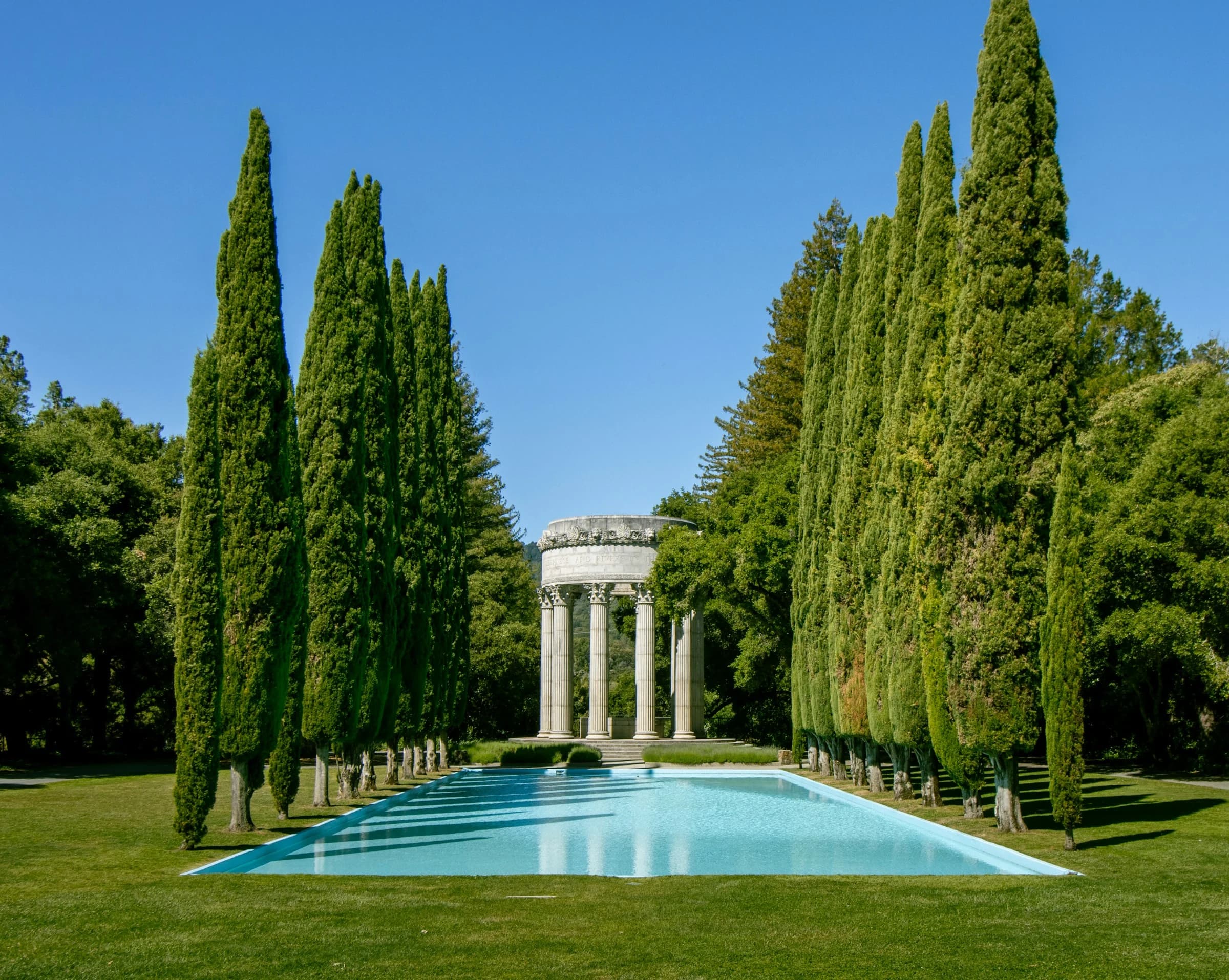
    The Pulgas Water Temple, on Cañada Road near Filoli, stands as an elegant monument to the engineering marvel that brought Hetch Hetchy mountain water more than 160 miles to the San Francisco Bay Area. This Greco-Roman style temple, with its fluted columns and reflecting pool, was built in 1938 to commemorate the 1934 completion of the Hetch Hetchy Aqueduct. Set in a tranquil grove of trees, the temple is a testament to the importance of water in the region’s history and development, serving as a picturesque site for visitors seeking peace and historical perspective.

    Beyond its grand façade, the Pulgas Water Temple’s inscriptions and architecture tell a story of human triumph over geographical challenges. The site is surrounded by beautifully landscaped gardens, making it a popular spot for picnics and special occasions, particularly weddings. Visitors to the temple can also learn about the complex journey of the area’s water supply from the snow-capped Sierra Nevada to the Bay Area’s urban centers. Nearby Edgewood Park offers hiking trails that provide an opportunity to explore the native flora and fauna, enriching the experience of those who come to admire the temple’s serene beauty.

  • Stanford University, a top-ranked, private research university located in California's Silicon Valley1 photo

    Nearby

    Stanford University

    Stanford University, located in Stanford, California, is one of the world’s leading research institutions, renowned for its academic excellence, innovative research, and beautiful campus. Founded in 1885, it has played a pivotal role in shaping Silicon Valley and advancing global education.

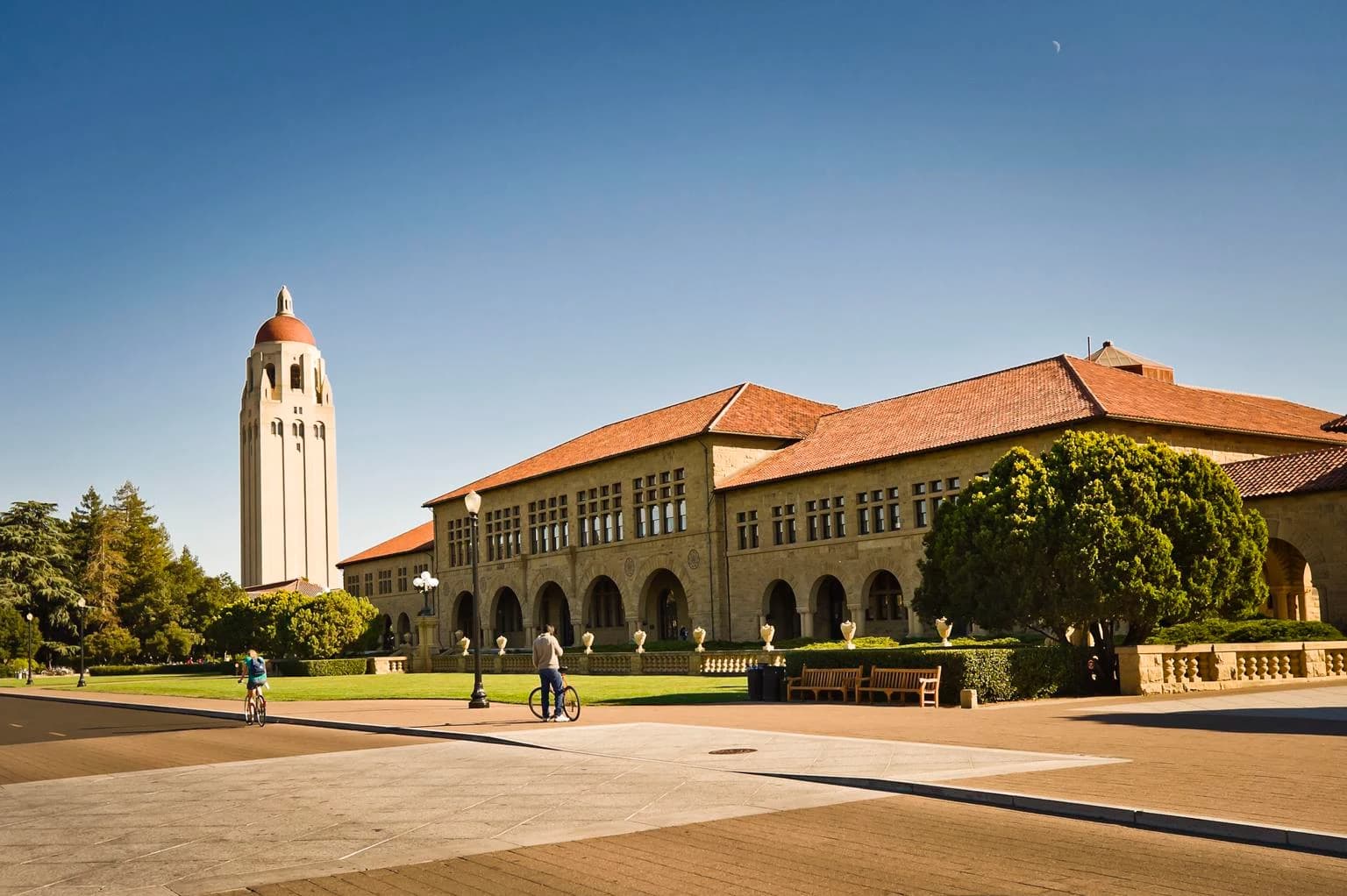
    Founded by Leland and Jane Stanford, it is a prestigious private research university situated in the heart of California’s Silicon Valley. Known for its rigorous academic programs, cutting-edge research, and entrepreneurial spirit, Stanford has consistently ranked among the top universities globally. The expansive campus, marked by iconic landmarks such as the Hoover Tower and the Main Quad, spans over 8,000 acres and includes state-of-the-art facilities that support a wide range of disciplines. Stanford’s influence extends beyond academia, as it has been instrumental in the development of Silicon Valley, fostering a culture of innovation and entrepreneurship. With its commitment to excellence and global impact, Stanford University continues to shape the future through education, research, and innovation.

Gallery

Photos of Woodside

Ed Stephens

Talk to Ed

Buying, selling or building? Tell him what you have in mind and he’ll get back to you shortly.

Ed Stephens

Coldwell Banker Realty

Peninsula Roots & a Builder’s Eye

Since 1974, Ed Stephens has guided buyers, sellers and developers across the Peninsula, from Burlingame and Hillsborough to San Mateo. He looks forward to bringing that experience, and his eye for architecture and design, to your next move. Explore the site, and reach out to Ed with any questions.